

All You Need To Know About Swimming When Pregnant
Pregnancy is an exciting time for many but also can be full of highs and lows. Whilst it may not be the first thing on your mind, keeping active before, during and after pregnancy can be important for your own wellbeing, both mentally and physically.
Is it safe for me to swim whilst pregnant?
We’ve partnered with Vikki Barrett, open water coach, midwife and collaborator for the Active Pregnancy Foundation to bring you our advice on swimming in each phase of your pregnancy; what’s happening in your body during that time and how this can affect you whilst you’re swimming pregnant.
We’ve created the following sections to support you throughout your pregnancy. Download the full guide here or skip to the section below most relevant to you:
- Staying Active Whilst Pregnant
- Can I Go Swimming When Pregnant?
- General Advice For Swimming Whilst Pregnant
- Mindfulness
- Advice Based on Period of Pregnancy
- Pre Pregnancy
- Fertility Treatments
- 1st Trimester
- 2nd Trimester
- 3rd Trimester
- Post Partum or Postnatal
Staying Active Whilst Pregnant
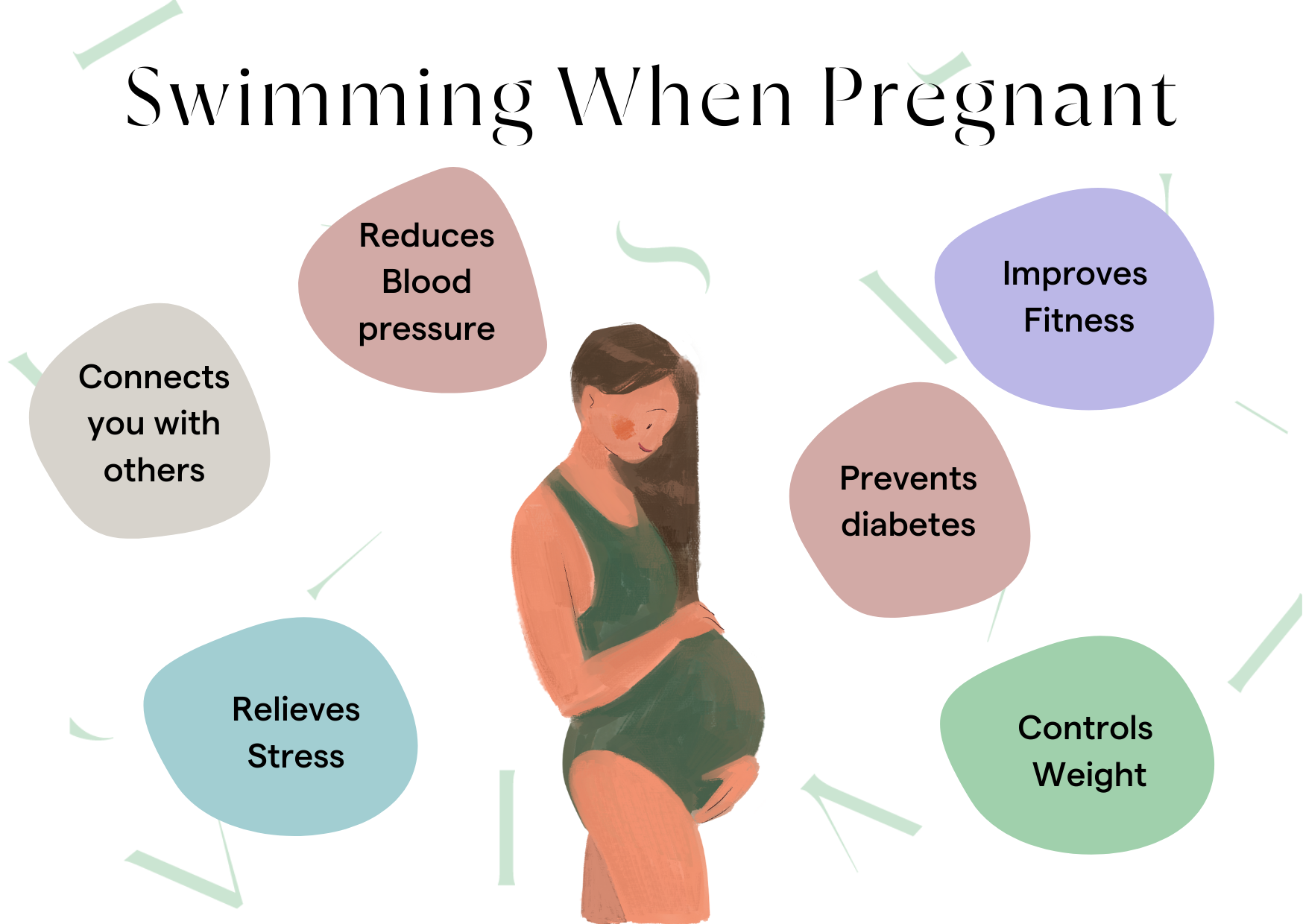
Your doctor may recommend 150 minutes of activity per week whilst pregnant and with good reason. Staying active whilst pregnant can help in all these ways:
- Relieves mental or emotional stress which may arise as a result of hormonal and physical changes or psychological dissatisfaction. This is not uncommon when carrying a child for the best part of a year!
- Improves fitness which in turn aids sleep
- Improves mood and fosters psychological contentment such as self-confidence, self-esteem and satisfaction
- Helps control weight
- Reduces stress (which can lead to low birth weight)
- Reduces high Blood Pressure problems
- Prevents gestational diabetes
There is no valid reason why healthy women should not engage in exercise provided they are aware of potential dangers. Indeed women who have exercised moderately on a regular basis should continue their workouts as long as they feel comfortable (Hartmann and Bung, 1999)
Note of Caution
The exception to this rule is women with complicated pregnancies and if you’re unsure of whether you fall into this category, you should always consult your doctor or midwife, particularly if you are aware of cardiovascular or respiratory problems.
Can I Go Swimming When Pregnant?
As yet, there is no evidence that staying active during your pregnancy causes harm to your child or increases the chances of stillbirth. However, there are certain activities that are better for pregnant women. Swimming is certainly one of those activities. Water-based activities may be favoured over weight-bearing activities as the buoyancy can assist joint movement and minimise the compressive forces of gravity.
It’s also possible that the hydrostatic pressure of water can redistribute blood and fluid pooling in the limbs back to the heart thus reducing uncomfortable symptoms of pregnancy such as swelling. (Hartmann and Bung, 1999).
The cooling effect of water serves as a thermoregulatory buffer. This allows warmth to transfer away from you rather than toward you, as you might find in a sauna or hot tub which we suggest you avoid. This means that it can prevent the fetus from overheating and potentially decreased blood supply.
So the answer is a big, yes! In most circumstances it is absolutely okay for you to swim whilst pregnant should you wish to. However, we can’t stress enough that it’s important to remember that there’s no one rule that fits all where pregnancy and swimming is concerned and what has worked for someone else you know or follow on social media, may not be right for you.
So listen to your body, take things slowly and never feel pressured into taking advice from a non-medical professional. Pregnancy is such a personal journey after all! This guide aims to give pregnant swimmers advice whether their preference is for open water swimming, cold water swimming, pool swimming or a combination of all three.
General Advice for Swimming Throughout Your Pregnancy
There is some advice that applies throughout your pregnancy whilst swimming, whether it’s outdoors in open water or in a pool or lido.
- Jelly legs are common in pregnancy. This is caused by low blood pressure which can lead to fainting or dizziness. So take everything slowly, especially entering and exiting the water.
- Swimming in cold water should always be avoided in the event of heart disease, cardiac abnormalities or raised blood pressure.
- Listen to your body and adapt!
- Start gradually if you don’t already swim, as little as just a few minutes if you’re swimming in cold water and ten minutes in a pool is fine. If you’re new to cold water swimming, a minute or two is plenty.
- Consider beforehand how you will warm up both before and after your swim.
- Avoid dehydration and overheating
- Don’t set long term goals and be prepared for a change in what you used to be able to achieve. We would advise against any competitive activity unless already an established athlete including mass starts and buoy turns
- If it feels comfortable keep going, if not seek advice.
- DON’T BUMP THE BUMP. Be extra careful when entering and leaving the pool, lake or river.
- If in doubt, speak to your midwife and/ or doctor.

Mindfulness
You might already be well aware of the benefits of swimming to your mental well-being. Swimming, in general, is a highly rewarding mindfulness practice.
 Poor maternal mental health is associated with poorer pregnancy and birth outcomes and also poses a risk for offspring in later life. However, higher levels of physical activity and exercise are generally associated with a lower risk of depressive symptoms. A survey run by Scottish Swimmers showed that four in every five people reported mental health benefits from regular open water swimming.
This may be down to the effects of swimming in cold or cooler water itself but many think that the sense of community and belonging you experience as part of a group swim also has a lot to do with it. This is no different in pregnancy or post-birth which can be an anxious or lonely time for some.
Studies have found that mindfulness-based stress reduction interventions during pregnancy reduce the prevalence of low birth weight by 29-36% as well as other complications of pregnancy. (Crovetto et al, 2021)
Swimming for mindfulness may also be beneficial for those undergoing fertility treatments or following a fertility treatment as a way to relieve stress after what has been a period of change for your body.
Advice Based On Period Of Pregnancy
Pre-pregnancy
If you’re trying to get pregnant there’s really no reason to stop exercising as usual. It might optimise your chances of conception if you are both happy and healthy. Going into your pregnancy in good fitness can reduce the risk of adverse health effects for both mother and the baby.
What’s Happening To My Body?
- You may start preconception care which involves screening for illnesses, STIs or anything that may affect your pregnancy.
- Because reproductivity spans almost four decades, optimising health before and between pregnancies is an ongoing process.
- Lifestyle factors such as diet and exercise, stress, smoking and alcohol consumption will have an impact not only on general health but also on reproductive health.
- Lack of physical activity contributes to health conditions such as obesity, oxidative stress and cardiovascular disease that can be factors of infertility.
- Regular exercise will improve energy levels, fitness and stamina for pregnancy and will help maintain weight within the desired range. It is recommended that exercise be regular and steady.
Do — Try Open Water Swimming for the first time if you wish! It can be a useful way to improve fertility, particularly for those who are not familiar with regular exercise as it is gentle on the body as there’s less risk of joint strain due to the support of the water. Swimming encourages muscles tone, improves endurance, and it can improve heart and lung function
Do — Try Cold Water Swimming. Cold water is thought to boost the immune system and improve circulation – which is beneficial for getting blood to the reproductive organs. Swimming in cold water can even help with libido or sexual performance issues.
Do — Maintain a good level of fitness by visiting your local pool or lido as optimising health before and between pregnancies is an ongoing process.
Do — Try swimming in a pool if you have never tried swimming before. If you’re unsure where to start then connecting with a coach can help boost your confidence.
Don’t — Risk picking up bugs by open water swimming on rainy days.
Don’t — Rush in. If it’s your first-time cold water swimming, take it slowly and ease yourself into swimming in lower temperatures. A coach can help you swim safely and effectively. Find one in your local area using our coach finder.
Don’t — Stop swimming. If you’re worried about exposing yourself to nature’s elements whilst you’re trying to conceive, hit the pool instead to keep up your fitness.
Safety Advice
This stage of your pregnancy journey is the perfect time to start open water or cold water swimming for the first time or to maintain your levels of fitness if you’re a seasoned swimmer. The best safety advice we can give you can all be found in our guide ‘The Best Advice for All Outdoor Swimmers You’ll Ever Hear.’
Fertility treatments
Anyone who has gone through IVF or any kind of fertility treatment will tell you that it can be mentally draining. Depending on the treatment (IUI, IVF or ICSI) the effects will be different for each person. Swimming can help through this period of change and uncertainty as it’s great for mindfulness and has been known to relieve stress, particularly as your body is put through hormonal changes.
What’s Happening To My Body?
- Your hormones will be at extremes, with some treatments even putting your body into a menopausal type state.
- You might feel more irritable than usual
- You may feel temperature changes, tiredness or vaginal secretions you’re not used to
- You may be feeling more stressed than usual, so be extra kind to yourself!
Do — Join an open water swimming group. Community is a huge part of improving mental health, helping you to stay as relaxed and connected as possible through your treatment.
Do — Swim for shorter periods of time. Regular, low-intensity exercise is advised during fertility treatment such as IUI or IVF – too much exercise during this time can have a negative impact on fertility.
Do — Speak to your doctor. If they’re happy for you to do so, you can continue to improve your open water swimming ability by practising in a pool. During fertility treatments, it’s good advice to keep moving in small amounts. Sticking to a routine can be a good way to eliminate stress.
Do— Keep going to your regular swim open water swim group meeting. Even if you can’t swim due to extraction or decide not to for another reason, being outside and close to water can lift the spirits and have the same effect as getting in.
Don’t — Swim in open water immediately after an invasive treatment or if you’re close to extraction. Some natural bodies of water can carry bugs and whilst they’re usually relatively harmless, you should be particularly careful after IVF to avoid them.
Don’t — Stop swimming in cold water, unless you have been advised to do so. Even if a natural setting isn’t possible for you, then a lido can provide a great alternative if you have one nearby.
Don’t — Go too hard or too long in the pool, even if you’re a regular swimmer. Strenuous or intense exercise for four or more hours a week can have a negative impact on IVF success.
Safety Advice
Make sure you speak to your doctor or midwife for procedural advice before and after egg collection and insemination. They should be able to advise how long before and after the procedure it is safe for you to swim.
1st Trimester
 Congratulations on your pregnancy! This can be an exciting time for many but can be a time of anxiety for some, with one-quarter of all women feeling anxious in the first and second trimesters. This is understandable as it’s the most likely time for bleeding and miscarriage. Some women may have suffered multiple losses and for others, it might be the first positive pregnancy test result after rounds of IVF. In such a whirlwind of emotions and changing hormones, it’s important to take some time for yourself and hopefully, swimming can help.
What’s Happening To My Body?
- By week 4-5 your baby is the size of a poppy seed, 2mm.
- Early symptoms can mean breast tenderness and tiredness.
- Cramping and spotting may occur during this stage but it’s best to check with your doctor if you experience this.
- Due to hormones and increased blood flow to the pelvic area, you may urinate more frequently.
- You may experience some bloating, wind and constipation so it’s a good idea to cut down on caffeine and drink more water.
- By week 11 the embryo is 4cm in length so clothes will start to feel tighter and breasts may feel heavier.
- By week 12, you should have had an appointment with a midwife and a date for your first scan.
Do — Continue to open water swim if you feel comfortable as being among nature can be incredibly soothing. However, it’s important to listen to your body and do what’s right for you.
Do — Wait for Summer before trying cold water swimming for the first time. In early pregnancy, your blood flow will alter to ensure blood is getting to your baby which means more blood will also go to your peripheries. This increased peripheral blood flow may mean that you’re likely to get colder more quickly and take longer to warm up. Exiting the water too quickly can cause you to feel dizzy!
Do — For seasoned swimmers, get out of the water more slowly than you usually would do and listen to your body. Being pregnant may alter your tolerance and whilst you might not know you’re pregnant immediately, once you are aware you might want to spend more time checking in with yourself, so you leave the water at a time that feels good for you.
Do — Listen to your body if you’re swimming in a pool. Fatigue is more common during the first trimester, so it’s likely that you’ll want to swim for shorter periods of time. If you feel like you’ve done enough, you probably have.
Don’t — Confuse dirty water sickness with nausea when open water swimming. Nausea is far more common in the first 6-12 weeks but can continue for up to 20 weeks and beyond in 20% of pregnancies! If you’re feeling a lot of nausea, avoid open water for a while and speak to your midwife.
Don’t — Overdo it when cold water swimming. The body requires more energy to swim in cold water and it’s natural to feel more tired in general during this period. If you’re used to swimming in cold water, try staying in the water for less time than you usually would.
Don’t — Undereat if you’re taking frequent exercise at a pool. Swimming is a great way to burn calories, but during your first trimester, you’ll need an additional 90 calories a day. So treat yourself to something healthy and hearty after that swim.
Safety Advice
 It’s still safe to keep swimming during this period and even though there are changes to your body that may make you feel more fragile than usual. Because of increased circulation, there are respiratory and cardiac changes taking place that means you should be mindful of the amount of exercise you’re doing. You should still be able to hold a conversation whilst you swim. Whilst it’s largely ok to swim as usual, this, of course, changes if you’re having a complicated pregnancy. If this is the case, swimming might not be the best for you. Walking, yoga and mindfulness practices like Tai Chi, are the most we would recommend.
2nd Trimester
 Welcome to the second trimester! This is when most women bloom. The good news is that most mums-to-be experience far less vomiting and nausea during this time and so you might be feeling energised, with increased libido! Anomaly testing is offered, to rule out physical defects. The same scan can reveal the sex of the baby, should you choose to find out. During this time, it’s normal to feel anxious, particularly as you watch your own body change shape. As with the first trimester, swimming is a great way to ease the mind whilst you’re pregnant.
What’s Happening To My Body?
- You will be feeling more energetic and may have an increased libido
- The baby is the size of a lemon and 8.5cm by week 14. It can now hear your voice so start talking to it!
- You might get nosebleeds due to increased blood flow to the nasal passages. Vaginal discharge also increases.
- You may be able to feel your baby moving around a little. This will feel like ‘flutters’.
- You may be feeling less steady on your feet due to expanding uterus and enlarged breasts.
Do — Make a checklist the night before you go open water swimming. The second trimester can bring ‘baby brain’ or maternal amnesia, so it would be easy to forget a piece of vital kit!
Do — Continue cold water swimming, if you feel confident to do so. Cold water is great for inflammation. If you’re looking for guidance when you begin, the coach finder is a great place to find a coach or a group.
Do — Take greater care on the poolside. Balance is affected in this period and pregnant women are 2-3 times more likely to be injured falling than non-pregnant women.
Don’t — Go open water swimming if the conditions don’t feel right. If banks are more slippery than usual, you stand a greater chance of falling, particularly now when your balance is more affected.
Don’t — Wear anything that makes you feel uncomfortable. If the water is chilly but your wetsuit is starting to feel too tight, consider wearing boots, gloves and a swim cap to keep warm.
Don’t — Overdo it in the pool. You might be feeling more energised during this trimester, but as with trimester one, your body needs even more calories and there’s the added factor of girdle pain, which can be worsened by breaststroke. If you leave the pool feeling shaky, it will increase your chances of a fall, so stay well fed and very well hydrated.
Safety Advice
The second trimester is a wonderful time. You’ll be feeling great and connected to your baby as you feel it move for the first time. The main safety advice we can give is to be careful. Because there is such an increased chance of falling during this period, it’s especially important to take care of the banks of rivers and lakes, in changing rooms and by the pool. If you do fall, always seek out help from your midwife.
3rd Trimester
 Welcome to the 3rd trimester. An exciting whirlwind of baby names, preparation and maybe even a baby shower awaits. Now that labour is imminent, 8% of women report a fear of childbirth. At this stage, many will want to take it easier, finding exercise more difficult with the additional weight to carry. However, being in the water can be a soothing and gentle way to stay active. Hydrotherapy has been suggested as a treatment for swelling, which is common during this time due to excessive fluid accumulation. If it feels right for you, there’s still no need to stop swimming.
What’s Happening To My Body?
- By week 24 of pregnancy your eyes might be feeling a little drier or more irritated than usual due to a hormonal imbalance. It might be a good time to grab some goggles if you don’t already own a pair.
- By week 26 your baby is the size of a red cabbage and weighs approx 760g
- Backache, leg cramps, stretch marks and piles are all common. Our best advice is to keep active and avoid sitting for too long.
- By week 30, you may find that you’re feeling restless at night with disturbed sleep. This is quite normal as the baby grows and puts pressure on your diaphragm and lungs.
- By week 34 you may be experiencing Braxton Hicks or leaking colostrum from your breasts.
- From week 37, congratulations, you’re full term! This means that your baby can be born any time from now and their lungs are fully matured.
- ‘Nesting’ may kick in as you observe your baby’s movements regularly
- Week 40 is usually your due date. However, only 5% of babies arrive on their estimated date of delivery so don’t worry if your little one doesn’t arrive exactly when they’re meant to.
Do — Continue open water swimming if you feel safe to do so. Whilst many women complain of respiratory discomfort in late pregnancy, gentle, steady exercise may mean you see an improvement.
Do — Continue to swim without your wetsuit if that’s how you have been swimming. Your uterus and breasts will be expanding, so it’s important not to feel restricted. It’s likely you’ll feel warmer during your third trimester anyway. It has been suggested that cold water may improve obstetric outcomes, so continue to swim if you feel safe to do so.
Do — Take care if you’re doing breaststroke in the pool. Increased oestrogen and greater laxity in joints will widen your joints to allow you to give birth, but this also means that breaststroke can exacerbate pelvic girdle pain, which you may be a new complaint or something thing that you have been experiencing since the second trimester, so be gentle and take your time.
Don’t — Wear anything too restrictive whilst swimming in open water. Accessories are fine, but getting boots off might be difficult! Ideally, you’ll need to sit down or get someone else to remove them for you. The main thing is to feel comfortable at all times.
Don’t — Swim alone during this time. You may need help getting in and out of a natural body of water as well as someone to help you get your swimming boots and shoes on and off again.
Don’t — Do backstroke in the pool, or in any body of water. Lying flat causes the uterus to compress major blood vessels during the third trimester.
Safety advice
 There are lots to consider during this period, so take care and as always listen to your body and the medical professionals around you. The best advice we can give you is to avoid restrictive clothing, like a wetsuit, avoid backstroke and continue to ensure you’re eating enough calories to compensate for the exercise you’re doing. Your heart and lungs are more affected by the enlarged uterus at this stage compared to any other period, so if you don’t feel like swimming, then don’t.
Post Partum or Postnatal
 Congratulations on your new arrival! A new baby can be a busy time full of visiting loved ones and of course, getting used to a new routine of having an extra person around. During this period, it’s easy to not take enough care of yourself because you have so much going on. Some women suffer from postnatal depression during this time . Open water swimming has been known to reduce anxiety and depression but whether you’re feeling postnatal, or just a little exhausted, the soothing benefits of swimming can help.
What’s Happening To My Body?
- You may have the baby blues for the first few days due to the hormone shift, pressures of breastfeeding and caring for a newborn.
- If you feel depressed for longer than a few days, seek medical help as you may have postnatal depression. This needs diagnosis and treatment.
- If you’ve suffered a lot of blood loss or had a Caesarean section your recovery time may be longer and it may take a little longer to return to pre-pregnancy fitness levels.
Do — Join an open water swimming group. Being part of a community is a wonderful antidote to feeling lonely and you may meet other sympathetic parents in the process.
Do — Wait until any bleeding has stopped and wounds have healed at least after the 6-8 week check-up before going cold water or open water swimming. There is a higher risk of infection when you’re immunocompromised or under stress.
Do — Look for a mum and baby time at your local pool once your baby is old enough. Enjoying an activity you love together is a great way to bond and to meet other parents. Or go alone, a quick swim is a great opportunity to leave your baby with your partner for some quality bonding time.
Don’t — Open water swim alone. Unless you’re incredibly experienced, it’s likely you’re returning to the water after some time off, so be safe and take a buddy.
Don’t — Take your baby cold water swimming as they’re unable to control their temperature well.
Don’t — Stay in a pool too long with your baby. Be mindful that your baby will get colder faster than you.
Safety advice
As your body returns to normal, so does our advice, so read our guide for swimming outdoors for more general guidance. However, if you’re planning on taking your baby swimming with you, you should always seek advice from your midwife or an expert before you do so.
Finally, all pregnant swimmers should stop exercise and activity immediately in the event of…
- Outflow of amniotic fluid
- Breast pain
- Vaginal bleeding
- Headaches
- Muscle weakness
- Difficulty breathing
- Back pain
- Dizziness
- Abdominal pain
- Contractions
A huge thanks to midwife and active pregnancy expert Vikki Barrett @theswimmimgmidwife for her advice and passion for this topic. If you’re looking for an open water swimming group to join, take a look at our coach finder.
References and more reading
- ‘What’s Happening To My Body’ referenced from Emma’s Diary
- Huber I (2003) An Exploration of Aquanatal Exercise. British Journal of Midwifery. 11 (4): 218-222
- Hartman S, Bung P (1999) Physical exercise during pregnancy- physiological considerations and recommendations. Journal of Perinatal Medicine. 27(3):204-15
- Gundle L, Atkinson A (2020) Pregnancy, cold water swimming and cortisol: The effect of cold water swimming on obstetric outcomes. Medical Hypotheses. 144
- Crovetto F, Crispi F, Casas R, Martin-Asuero A, Borras R, Vieta E, Estruch R, Gratacos E (2021) Effects of Mediterranean Diet or Mindfulness-Based Stress Reduction and prevention of Small-for-gestational Age Birth Weights in Newborns Born to At-Risk Pregnant Individuals. The IMPACT BCN Randomised Clinical Trial. JAMA. 326(21) 1-11