If you’re thinking about completing a long distance swim, these tips will help you get there.
Swimming is a brilliant full body exercise that uses most of the body’s muscle groups. So it’s little wonder that when you leave the pool you feel tired and could quite easily take a nap. Even during your swim, you may feel like you need to take several rest periods, which is totally understandable if you’re training hard and not simply floating around and enjoying the water, which is also perfectly fine to do!
We’ve all seen those people who make long distance swimming look easy, like they could swim for hours without stopping. But it’s very likely that those people have practiced hard, honed their technique and made sure that they’re swimming regularly. Ultimately, absolutely anyone can learn to swim continuously if they’re willing to put in the time and effort and reward is absolutely worth it. Imagine being able to say you’ve swam the channel. Feeling up for it? Then take a look at our tips for swimming continuously.
Our hit list for swimmers looking to go the distance.
Trickle breathing
You may have already heard of trickle breathing, but this is something that many beginner swimmers struggle with and if you have only just started to go open water swimming, then this is an important thing to master.
Trickle breathing works by breathing out whilst your head is under the water so you’re ready to breathe in again when your head is out of the water once more. The trick is all in the breathing out. If you breath out slowly, through your nose, then you won’t breath out too much. And this way, the inhale will take care of itself.
This is a difficult thing to master and might not come naturally right away, so try practicing in a pool before you venture out into the ocean or a lake.
We appreciate that if you are new to swimming that this is a lot to take in and it might sound awkward! So consider booking a session with an open water swimming coach, who may be able to help you master this technique.
Check your body position
Even the most fit and healthy people sometimes find that whilst they can run a marathon, they get tired after swimming just a few lengths. This is usually because their body position is wrong, and the wrong body position can use up energy quickly.
When you’re in the water, ensure your legs aren’t sinking. Our bodies are like see-saws and lots of people think that our legs are just heavy or ‘sinky’. But that’s not usually the case. If your legs are trailing underneath you, that is likely to be the consequence of your head position looking forward. So to keep a flat body position, try looking directly down to the bottom of the lake and your legs should raise up into a far more streamlined position.
Again, none of this will come naturally, so don’t feel down if you don’t get it right away. Try some strength training along with your swimming practice to increase strength in your arms.
Get the right equipment
The equipment you have is not vital but can be helpful if you’re looking to swim continuously or for long distances.
Try wearing a hat in the water, to keep your head warm and your hair from going in your face. Appropriate goggles can also be a huge help, make sure they’re clear for when it’s overcast and mirrored for a brighter day.
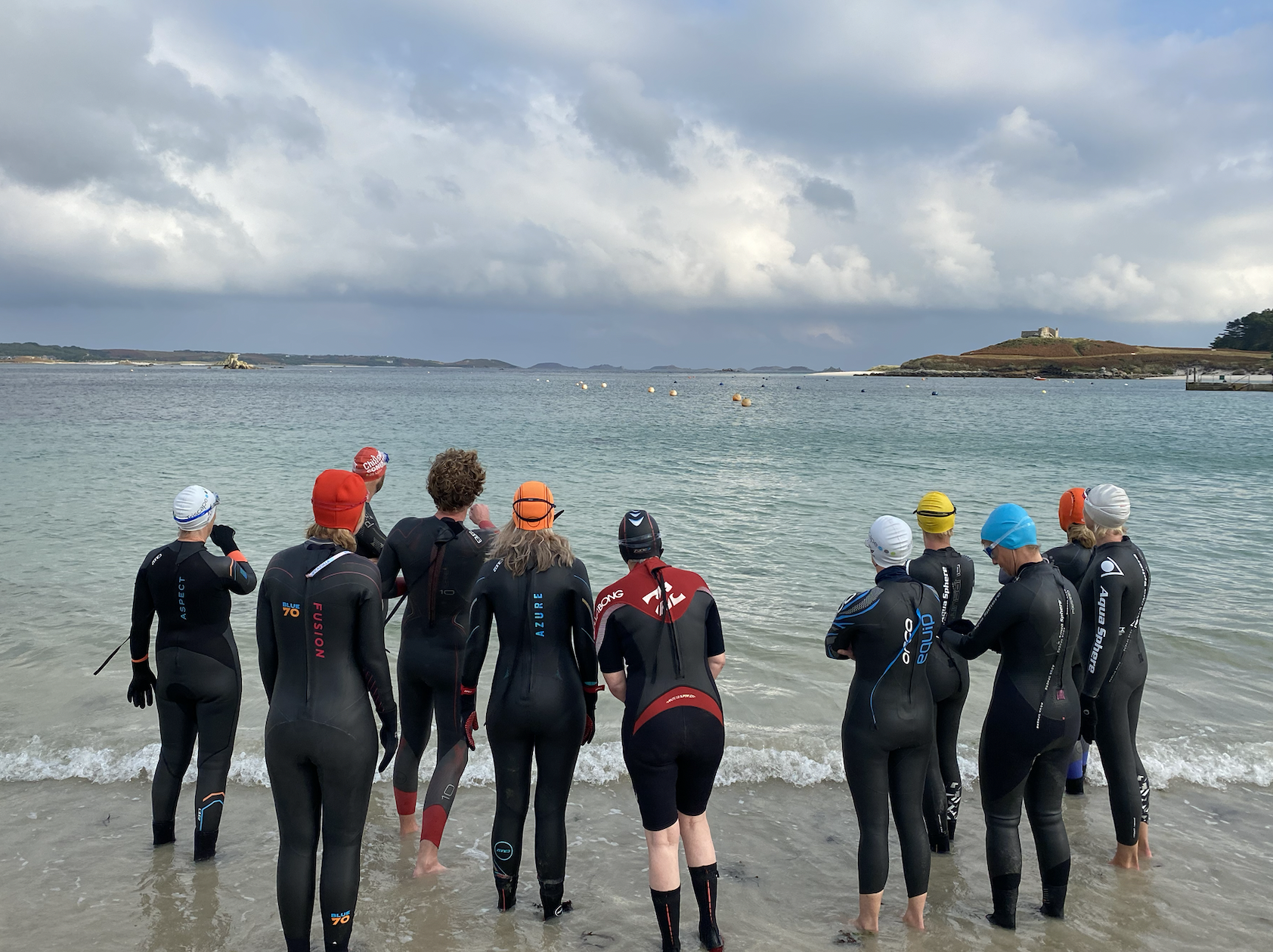
If you find the water too cold, then you might consider a wetsuit. A wetsuit will not only keep you slightly more streamlined, but it will also keep your body temperature slightly raised. If you’re swimming outside in a lake, loch or sea, your body will use up more energy trying to keep you warm. If you’re swimming long distances then you need every bit of energy you can get. Using a wetsuit, will help with your buoyancy and whilst this won’t help you swim for longer, mentally it can be helpful to know you have that additional help during your swim.
Keep your pacing steady
This is important for long distance or endurance sports and if you’re a runner or a cyclist, this will already ring true for you. Pacing is incredibly important when you’re open water swimming, because the last thing that you want is to feel exhausted toward the end of your swim. Ideally, you want to feel in control of your speed at all times and a good way to do this is to start off more slowly than you would usually swim and increase your pace overtime.
Understanding what feels like a comfortable speed for you will only come with time and practice. One way to help get to know yourself better as a swimmer is to time your laps and keep a log of how you’re feeling after each lap. That way, you’ll build up a good understanding of what is an easy lap for you and what feels like you’re pushing yourself.
Technique
Technique is so important for all types of swimming, but as we’ve touched on before, ensuring your position is right and your pacing is steady is a great way to allow yourself to swim more efficiently and preserve energy.
Other elements of your technique are just as important. Your legs are more muscle dense than other parts of your body and so each kick will use up more energy than one of your arm strokes. This means that for long distance swims, you want to use your legs as little as possible. So time your kicks so that they, like your pace, are steady and continuous, and you’re not kicking constantly, as you might do in a sprint.
Whilst this might all sound like it’s a lot to think about, a good coach will be able to help you understand how to improve your technique in just a few sessions, arming you with enough knowledge to continue practicing and perfecting it.
Training Plan/ Fitness
This might be the most important element of all, which is to practice, practice and then practice some more. Like any skill, your swimming and technique will improve over time, so don’t feel disheartened if you don’t feel like you can swim for miles from day one. It’s perfectly possible that you’ll achieve your goals and by keeping a log, you will be able to track your improvements over time, which is always very gratifying to look back on.
A good tip to sticking to your practice is to develop a training plan, ensuring that you’re swimming at least three times a week. Make sure you include a good diet as part of your plan as eating the right balance of foods can play a big part in your swimming performance. For more tips, you might want to watch our talk with the Wild Swim Brothers here.
Just as important as training is getting lots of rest and keeping well hydrated. Feeling tired will mean that you lack the energy to swim continuously, likewise, being dehydrated can be draining.
Long distance swimming can be incredibly rewarding, particularly if it helps you to accomplish something on your bucket list. And that feeling will ultimately be worth all of the time and effort you’ve put into your training and technique. For more extra tips on training and a free training plan, our Straight-Line Swimming membership is a great place to start. Hear first hand advice from experts, get free courses and gain access to a brilliant community of like minded swimmers to swap tips and tricks on achieving your open water swimming goals.
<Join Straight-Line Swimming>


 As well as being more buoyant, salt water is also saltier! This can cause problems in two ways, firstly with chafing even with previously comfortable swimming costumes or wetsuits – so lube up using an ocean friendly lube. Secondly, ingesting salt water can make you feel nauseous so practise adjusting your breathing pattern so you can breathe to one side to avoid being hit in the face by waves and chop.
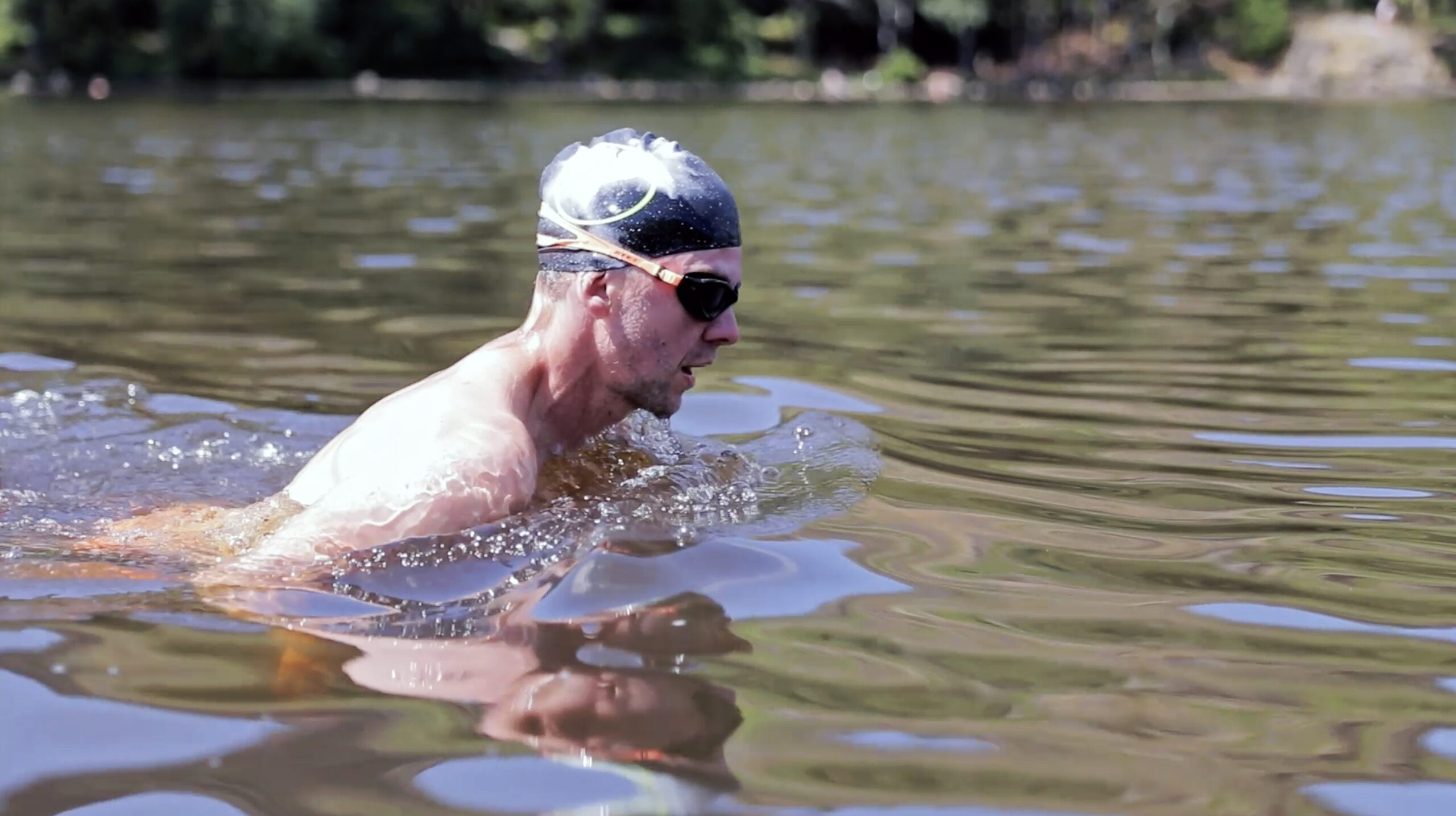
 In head-up breaststroke you need to use your arms and legs at the same time to keep you afloat – this puts you into a starfish position in the water, with arms and legs extended at the same time. With your head out the water you will also be almost vertical in the water. In head-down breaststroke you want to spend as much time as possible in a streamline position with your arms stretched out in front of you, hands together and your legs straight behind you, and you want to be more horizontal in the water. This creates much less drag. Once you have perfected putting your head under the water, practise in the pool pushing off the wall into a streamline position. Notice how good it feels and how far you can go with little effort!
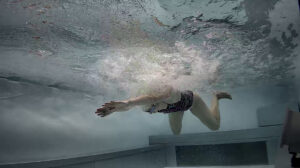 Breaststroke can be broken down into three stages: kick, glide, pull. Breaststroke is a kick driven stroke: around 80% of your propulsion comes from your kick, so you want to make the most of that power by getting into streamline and staying in that position as long as possible so you can glide through the water.
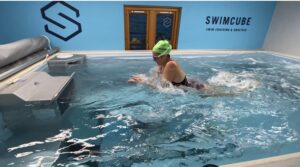 If only 20% of propulsion comes from your arms you don’t need a big arm stroke: think small arms. Visualise you are scooping out a bowl in front of you. Ideally you want your hand movements to stay in front of your shoulders and the elbows should be nice and tight. They might sneak under your shoulders but they shouldn’t go too far back: think about finishing with your hands under your head rather than under your shoulders – this will help keep the elbows a little more forward.