

The English Channel
Crossing the English Channel is the swimming equivalent of climbing Everest, a blue riband achievement for any open water swimmer. The shortest route from England to France is 21 miles as the crow flies, starting at Shakespeare’s Cliff or Samphire Hoe near Dover and finishing at the Cap Gris Nez near Calais. But tides and currents push swimmers into an S-shaped route, making the actual distance covered much greater. If swimming ‘the Ditch’ is on your radar, how do you get started on one of the world’s toughest open water challenges? Can you just turn up at Dover and head for France?
The simple answer is ‘no’. Swimming the Channel takes years of preparation and training, as well as a not insignificant amount of money. But don’t let this put you off, for a dedicated open water swimmer this lifetime achievement is more than possible. So where do you begin?
Here are our five top tips on how to start working toward your swim:
1. Get some miles in
The English Channel is the pinnacle of many swimmers’ open water careers and requires years of training. 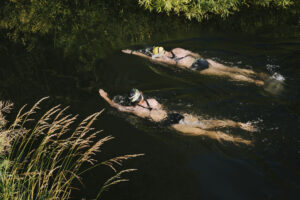 Get some miles under your belt by expanding your experience with some challenging non-wetsuit swims. At 10.5 miles, Windermere is a classic channel training swim – either a one-way or a more challenging two-way. Channel swimming is about more than just physical preparation, the mental challenge of swimming to France also needs to be considered and prepared for. Difficult swims in challenging conditions will help you ready yourself for your crossing.
2. Face your fears
Jellyfish, the dark, swimming in busy shipping lanes, waves and currents… If you have specific fears in the open water you need to work on these ahead of your swim. Try to get to the root of your fears, rationalise them, practise swimming and facing those fears, and formulate coping strategies for if you have to face those challenges on your big swim.
3 Book your swim
For any aspirant Channel Swimmer, the websites of the two governing bodies of English Channel swimming – the Channel Swimming and Piloting Federation (CSPF) and the Channel Swimming Association (CSA) – should be your first port of call as they each have step by step guidance and a bunch of FAQs. You’ll need to book the time and date for your swim and a pilot which you can do via either website.
Your pilot will be the person who will escort you with their boat on the day. Should anything go wrong, or if you don’t make it all of the way across, they’ll be on hand every step of the way. Booking a pilot isn’t cheap but it’s an integral part of your swim and you are not allowed to make the journey without one. You’ll also need to factor in a fee for the crossing itself along with CSPF or CSA membership.
4. Train, train and then train some more
You should start your training at least two years in advance. If you are in the south of the country the Dover Channel Training group train in Dover harbour from May to September and Durley Sea Swims provide similar training in Bournemouth. Your training will work towards a ‘Split Channel’ swim around three weeks ahead of your swim – a 7-hour swim one day followed by a 6-hour swim the next day.
Cold water acclimatisation should also be part of your training. As well as non-wetsuit swims of increasing distance, aspirant Channel swimmers often use ice baths and cold showers as part of their training. Winter swimming is a great way to help prepare yourself physically and mentally for being in cool water for over ten hours. Although the Channel averages 16 degrees Celsius in summer, immersion in colder water will prepare you for swimming in cool water for over ten hours. Becoming comfortable with being uncomfortable is your aim!
No man or woman is an island, and this is doubly true when it comes to a huge undertaking like swimming the Channel. Even the most seasoned swimmer will have some non-swimming related questions such as ‘Will I need a passport?’ (You do) and ‘Is there somewhere that I can get some hot food when I arrive in France?’ (Unfortunately not! You have to swim back to your boat as soon as you have touched land). Training with a supportive group of like-minded open water swimmers will help provide you with moral support.
5. Surround yourself with a great team
Channel swimming is all about the team you have around you – both before and during your swim. An open water swimming coach will help you prepare for your swim by honing your technique, working on fears and preparing a personalised training plan – check out our Coach Finder for your nearest Straight Line Swimming coach.
You should also think about your support crew onboard on the day of the swim – as well as the pilot and official observer you can have limited crew support to provide you with nutrition and support. It is not recommended that you have close family as your crew as they might find it difficult when things get tough – you need people you can rely on to help push you through when the swim gets physically or mentally challenging.
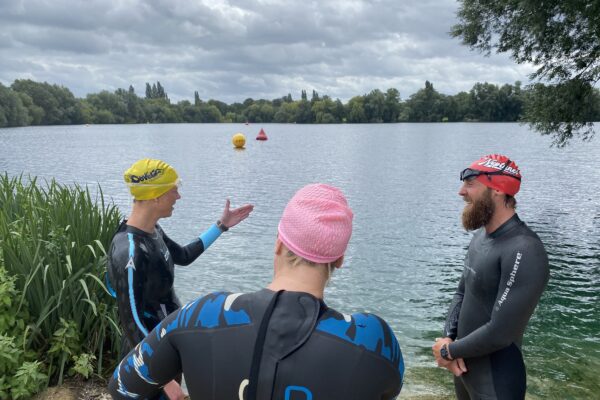
At Straight Line Swimming, we want to empower the world to swim, so if swimming the Channel is your dream, keep an eye on our Facebook page. We often have great motivational speakers with first-hand experience of swimming the Channel – such as Queen of the Channel Chloë McCardel – who will share their own inspirational stories and advice on how to accomplish this great feat. At Straight Line Swimming, we have an incredible private group of open water swimming professionals that you’re granted access to when you take any one of our courses or become a member.